The Invisible Commuter: Taipei MRT Habits That Make You Look Like You Live There
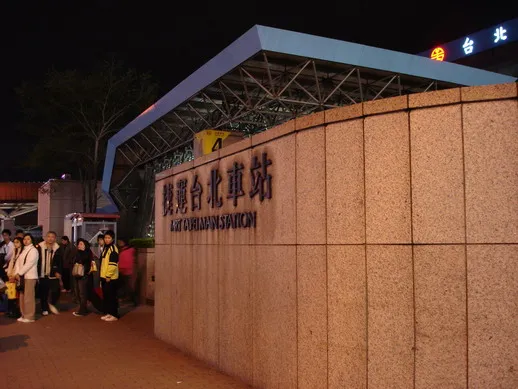
Photo: Unknown, CC BY-SA 3.0, via Wikimedia Commons
Here's the good news before we get to the corrections: the Taipei MRT is one of the easiest big-city transit systems on earth for an American to walk into cold. Stations are air-conditioned and signed in English, trains arrive every couple of minutes, and the platforms are clean enough that you'll feel strange finishing a granola bar on one. An EasyCard taps you through the fare gates for roughly the price of a drip coffee back home.
The catch is that all that calm is held up by about six unwritten rules that more than two million daily riders follow without a second thought. You, arriving from a system where boarding a train is a full-contact sport, will break at least two of them in your first hour. Nobody will yell at you — that is genuinely not how Taipei works. You'll get a small hand gesture, a polite half-smile, a person quietly rerouting around you — and you'll still feel it in your spine.
So consider this the manual.
The escalator is a two-lane highway
Stand on the right. Walk on the left. That's it, that's the rule. Taipei's escalators are long — some stations sit five and six stories underground — so the left lane is a working lane, and the person behind you is a commuter with somewhere to be.
One wrinkle worth knowing in 2026: at a handful of the busiest interchange stations, the operator has been testing a "fill both sides" policy during peak hours, with floor decals encouraging people to spread across the full width of the step. If you see those decals, follow them. If you don't, default to standing right. The system is not trying to trick you; it's trying to move 30,000 people an hour without anyone falling down a moving staircase.
Those painted lines on the floor are load-bearing
Look down at the platform edge before the train pulls in and you'll see two neat columns of queue markings flanking each set of doors. Those are where you wait, staggered back from the threshold so the aisle stays clear.
The choreography: doors open, everyone gets off, then you board. Not before. If you drift toward the doorway as the train arrives — a very American instinct, born of a lifetime of crowded platforms — you'll be gently blocked by a wall of people who simply will not move until the last passenger has stepped out. Let it happen. It takes eight seconds and it's the reason boarding never turns into a scrum.
The blue seats are sacred, and quietly so
Every car has a block of priority seats near the doors, marked in a darker shade than the standard ones. On a packed 6 p.m. Blue Line train, those seats will be empty while thirty people stand. This is not a joke and it's not politeness theater.
Who they're for: elderly riders, pregnant passengers, people with small children, and anyone with an invisible need you can't see. Taipei runs a subtle but real campaign encouraging people with hidden conditions to claim them. Short version — unless one of those categories applies to you, leave them alone. If you're carrying a sleeping toddler or limping on a blister, take one; nobody will say a word. If you're a healthy 34-year-old with four stops to go, stand.
The one rule with a price tag attached
No eating, no drinking, no chewing gum inside the paid area — meaning past the fare gates, not just on the train. This one is enforced, and the fine runs from NT$1,500 to NT$7,500 (roughly $45 to $230). Nobody's hiding in the shadows waiting to catch you, but station staff do issue tickets, and more importantly it's the single rule locals will judge you for.
Practically: finish the bubble tea before you tap in. Seal the water bottle in your bag. If you're overheating on a July afternoon, every station has drinking fountains outside the gates — drink there, then go down. And yes, the platform trash and recycling bins disappear once you're inside, because there's nothing to throw away.
Your backpack is a vehicle, so park it
On a crowded car, swing your daypack around to your chest or set it on the floor between your feet. This is close to universal behavior in Taipei and instantly marks you as someone who's been on the metro before. A backpack on your back takes up roughly one and a half seats' worth of space in a car that's already full, and the person whose face it's in will never say anything.
Doors, phones, and the countdown
When the doors start beeping and flashing, that's a countdown, not a challenge. Don't sprint the last ten feet; there's another train in three minutes. Don't wedge an arm in. The system is absurdly reliable, and it's reliable partly because nobody forces a door.
As for noise: Taipei cars are remarkably quiet. A short voice call is fine; a speakerphone call with your sister in Ohio is not. Watch video with headphones, and if you're traveling with a group, keep the volume at the level where the person across the aisle can't follow your conversation. It's not a formal rule — it's just the ambient expectation, and matching it makes you invisible in the best way.
Your two-second recovery script
You will stand on the left. It will happen — maybe at Taipei Main Station during the evening rush, maybe with a suitcase.
What to do: step to the right, tip your head slightly, and say 不好意思 (bù hǎo yì si) — roughly "excuse me" or "sorry to trouble you." It's the all-purpose Taipei apology, and it defuses basically everything. If your pronunciation is shaky, a small smile and a raised hand works just as well. Nobody is annoyed that a visitor exists. They just want to get upstairs.
The other recovery move: if you're blocking the queue lines because you didn't know they were there, step back and let the line re-form around you. No announcement needed. Two seconds of yielding reads as courtesy, and you'll get a small nod for it.
The cheat sheet
- Stand right, walk left — unless decals say otherwise.
- Wait behind the painted lines; let everyone off first.
- Leave the priority seats for people who need them.
- Nothing edible or drinkable past the fare gates.
- Backpack in front on a crowded car.
- No door sprints, no speakerphone.
- Keep your voice at library-adjacent volume.
That's the whole contract. Learn it once and the Taipei MRT stops being a puzzle you're solving and becomes the quiet background machinery of your trip — the thing that gets you to the night market on time, drops you three blocks from your hotel, and costs less than the airport coffee you bought on the way in.