Landing at Midnight, Sleeping by Two: A First-Night Taipei Playbook
You will land tired in a way that feels almost impressive. Fourteen hours in a metal tube, three movies you half-watched, a dinner served at a hour your body refuses to recognize. Then the doors open, the humid air hits you on the jet bridge, and some optimistic part of your brain whispers: you're in Taipei, go do something.
Ignore that voice. It has never been right.
The first night of a Taipei trip is not for sightseeing. It's for logistics disguised as a pleasant evening — a warm bowl, a short walk, a shower, and a bedtime that feels early and is actually correct. Get this night right and day two feels like a real vacation instead of a fog you're pushing through.
Step one: admit you won't sleep on the plane
If you're arriving from the West Coast, you probably left in the afternoon and flew through the night. If you're coming from the East Coast, the math is stranger — you slept, sort of, in fragments. Either way, plan on being functional but dim. Keep your carry-on to one bag you can actually lift, and put a clean T-shirt at the top of it. Changing clothes in an airport bathroom before the train is a small dignity that pays off.
Step two: read the MRT sign before you read anything else
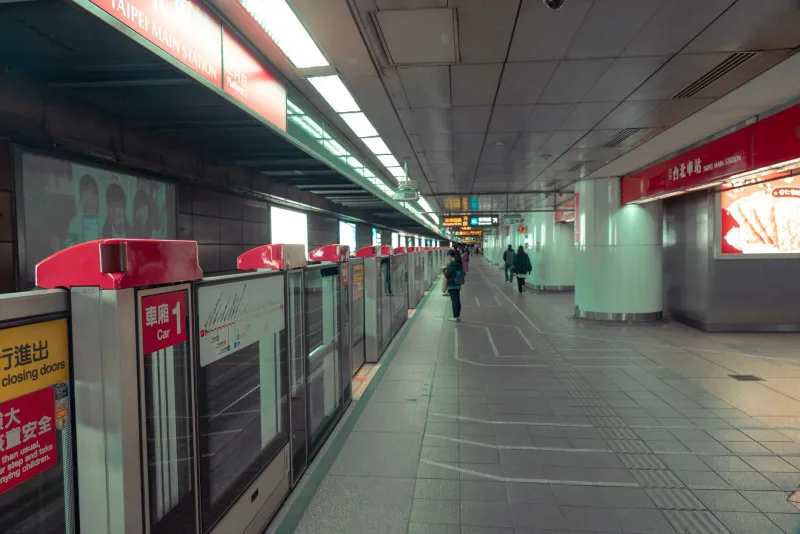
The Airport MRT leaves from both Terminal 1 and Terminal 2, and there are two flavors of train. The express runs to Taipei Main Station with only a handful of stops and takes roughly forty minutes. The commuter version stops everywhere and takes noticeably longer, but it also drops you at more stations along the way.
Fare is about NT$160 either way — you can buy a single ticket from the machines or load an EasyCard, which you will want anyway for buses, convenience stores, and the rest of the trip. Tap in, tap out, and don't overthink it.
The one thing worth checking the moment you clear customs is the timing of the last trains. Service runs into the late evening but not indefinitely. If you've landed late enough that the trains are done, you're looking at a taxi into the city (budget somewhere north of NT$1,000) or a bus. It's a hassle, not a crisis, and the airport taxi queue is orderly. But knowing which scenario you're in decides whether your night is leisurely or brisk.
Step three: get the bags off your body
Dragging a suitcase through a night market is how people end up eating standing up with one arm extended at a weird angle. Skip that. If your hotel is near Taipei Main Station or Ximending, drop your bags first — most Taipei hotels will hold luggage even if your room isn't ready, and lockers at the main station can bridge a gap. Then walk out with nothing but a daypack.
This single move converts you from a traveler hauling stuff to a person who lives here, which is the entire psychological trick of a good first night.
Step four: eat something warm and small
Airplane food is a trap. It fills the stomach and does nothing for the soul. What you want at 10 or 11 p.m. is one bowl, served fast, in a bright room with fluorescent lights and locals who look completely unimpressed.
Late-night beef noodle shops cluster around the busy commercial blocks of the city — Zhongxiao and Dunhua, the edges of Zhongshan, the streets behind Taipei Main Station. Night markets are another option, but pay attention to the clock: Ningxia and Raohe are lively until around midnight, then fold up quickly. Arriving at 11:45 expecting a feast is a rookie error. Get there by 10:30 or don't bother.
If your body is too wrecked to negotiate a menu, the convenience store is a legitimate answer, not a sad one. Taiwan's 7-Eleven and FamilyMart are genuinely good at this job: tea eggs from the warmer, a rice ball or two, a cold yogurt drink, a bottle of water, and maybe a pudding cup for morale. Add a hot bowl of instant noodles if the shop has a seating counter and nobody's hovering.
One rule: keep it light. A heavy meal at midnight is a guaranteed 3 a.m. wake-up call.
Step five: walk for twenty minutes, then stop
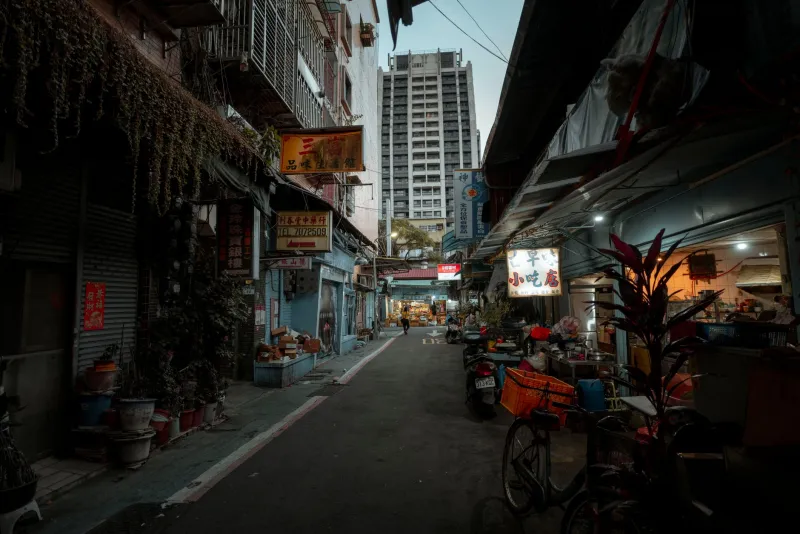
Not a night out. A wander. Pick the block around your hotel and make one loop — the alleys behind Zhongshan, the quiet end of Dadaocheng near the river, the edge of Ximending where the neon thins out. Taipei at night is mild, walkable, and safe in the way that American cities rarely feel after dark, so let yourself enjoy that.
Twenty minutes. No second coffee, no bar, no just one more neighborhood. The walk exists to tell your body the day is ending, not to start a new one.
Step six: the sleep math
Back at the hotel: shower, curtains shut, phone on airplane mode, lights off. If you landed around 8 or 9 p.m., you can reasonably be horizontal by midnight or one. Set an alarm for 7 or 8 a.m. — not because you'll need it, but because you might actually sleep through the morning if you don't.
When you wake up at an absurdly early hour (you will), don't fight it. Get outside into daylight within an hour, walk to a breakfast spot, and let the sun do the work. Morning in Taipei is the easiest place in the world to be awake.
And resist the nap. A 20-minute nap before 3 p.m. is fine. A two-hour nap at 4 p.m. will cost you two days.
If you land in the morning instead
Running the plan backwards works fine. Bags first, then soy milk and fried dough sticks at a corner breakfast shop, then a slow walk until check-in opens around 3 p.m. Stay upright, stay outdoors, and go to bed on the early side even though you feel wired. The same logic applies — you're just deploying it in daylight.
Tomorrow is the reward
You'll wake up before the city does, which is a gift. Six a.m. Taipei means temple courtyards with nobody in them, park paths full of uncles doing slow stretches, and a breakfast scene that starts before the coffee shops open. That's the payoff for a boring first night: a second day that starts on your schedule, not your jet lag's.