When the Gods Take the Street: Reading a Taipei Temple Procession
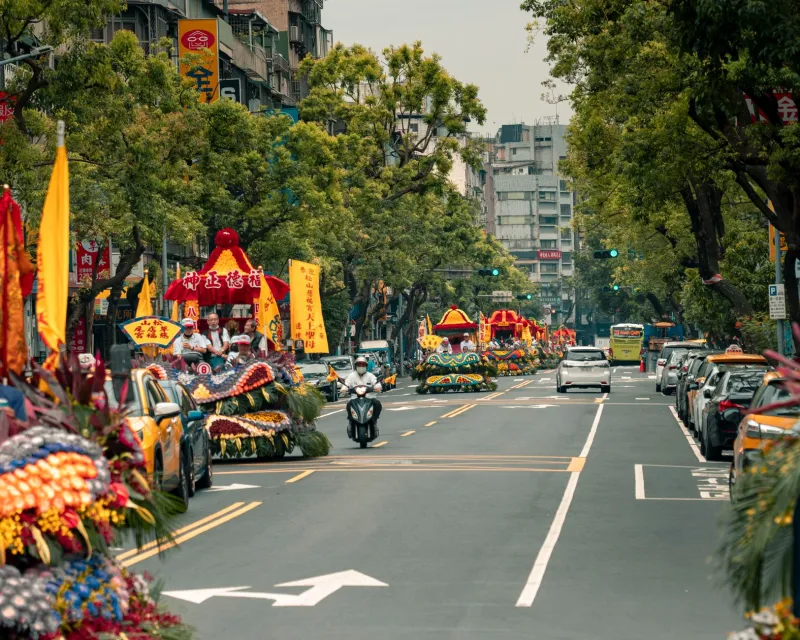
You'll hear it before you see it: a drum line, a gong with a two-second tail, then a string of firecrackers going off somewhere you can't quite locate. Down the block, traffic has stopped for reasons that have nothing to do with traffic.
That's a 遶境 (rao jing) — a procession, the street-level half of Taiwanese religious life. Deities spend most of the year indoors. On their birthdays and festival days, they come out and the neighborhood walks with them. For a visitor, it's the single best free spectacle in the city, and it rewards a little preparation.
What's actually happening
A temple holds its festival on the deity's birthday, on a founding anniversary, or for a rite of purification. The god's image is lifted from the main hall onto a palanquin, and the palanquin is carried along a route that takes in the temple's spiritual territory — the streets it looks after. Along the way, performance troupes escort it, households set out tables of offerings, and temples along the route receive the visiting god with firecrackers and incense.
In Taipei, the biggest ones cluster in the old neighborhoods: Wanhua, Dadaocheng, and Dalongdong. Mazu's birthday in spring draws enormous crowds to temples near the river. The Dadaocheng City God's summer festival is famous for its street parties. And the Wanhua Qingshan Temple festival, with its dramatic night patrols and its black-faced deity, tends to land in late November or early December — in 2026, check the temple's schedule, because it arrives right around the end of the month.
The cast in the street
Enormous amounts of this will make no sense unless you know who's who.
Up front, expect drum and gong troupes in matching shirts, moving in tight formations and working off a leader's hand signals. Behind them, performance troupes — lion dancers, martial arts teams, and the painted-face generals, young men in elaborate costume and heavy makeup who move in a slow, stylized swagger. Some processions include a spirit medium (jitong) who goes into trance and, in some traditions, cuts himself as an offering of service; this can be startling, and it's not performance. Then comes the palanquin itself, swaying on the shoulders of its bearers, often preceded by someone burning joss paper to clear the way and followed by a loose crowd of worshippers, families, and people in flip-flops who have done this every year of their lives.
A short glossary
- 遶境 (rao jing) — the procession itself, the god's tour of the neighborhood.
- 陣頭 (zhen tou) — the troupes: drummers, lion dancers, generals.
- 神轎 (shen jiao) — the palanquin carrying the deity.
- 廟會 (miao hui) — temple fair; the whole festive ecosystem around the rite.
- 八家將 / 官將首 — the painted-face general troupes, guardians of the deity.
- 乩童 (ji tong) — spirit medium in trance.
- 鞭炮 (bian pao) — firecrackers. Many of them.
- 平安 (ping an) — peace, safety. The blessing people wish each other.
- 擲筊 (zhi jiao) — the crescent-shaped divination blocks you'll see tossed on temple floors.
Etiquette: seven rules that cover almost everything
Stay out of the path. The route belongs to the god. Step to the side, don't cut in front of the palanquin, and don't walk between a performing troupe and the deity they're performing for — that axis is the whole point.
Don't touch. Not the palanquin, not the costumes, not the medium. Hands off, however photogenic.
Step over the threshold at temple doors, never on it. Take your hat off in the main hall.
Don't step on joss paper or offerings set out on the street. Walk around.
Give firecrackers real distance. They go off at ground level in the middle of the road. Stand behind the crowd, not beside the fuse, and know that kids and strollers belong a block back.
Accept with two hands. If someone offers you incense or a blessed charm, take it with both hands and a nod. It costs nothing and it means something.
Ask a volunteer, not a participant mid-rite. Temple desks and older ladies near the offering tables are the best sources for 'what's happening now.'
Photography: welcome, with judgment
Street photography during a procession is normal and generally welcomed — this is a public celebration, and plenty of Taiwanese people are shooting it too. The lines are about faces and flash.
Ask before tight portraits, and accept a no with a smile. Never use flash in a trance medium's face, and don't crowd the palanquin's front for a hero shot. If you see a sign in the temple banning photography, that's for the interior halls — respect it, and shoot the street instead. And do put the phone down for one minute of the procession. It's a better memory than the video.
Finding one without crashing one
Big festivals are announced: check the temple's own page, the city's cultural calendar, and posters taped to temple gates. Small ones appear with almost no notice — which is why the best method is simply to be in the right neighborhoods on the right weekends. Wander Wanhua on a Saturday afternoon, or Dadaocheng around Dihua Street, and follow the drums. If you hear firecrackers, walk toward them at a normal pace and stop a comfortable distance away.
Ask at any temple desk what's coming up. Volunteers are proud of their festivals and will happily tell a foreigner the date, the route, and where to stand.
Pair it with a neighborhood day
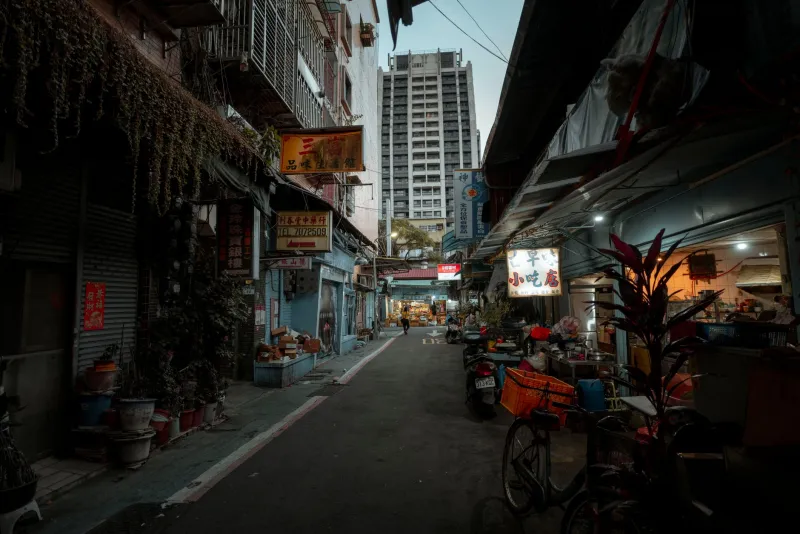
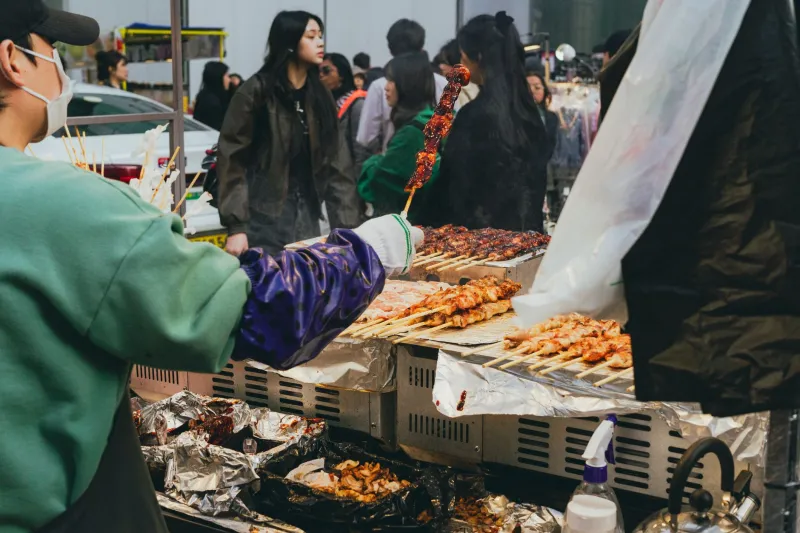
This is where the procession becomes an itinerary rather than a photo op. Wanhua: Longshan Temple in the morning, the Bopiliao brick lanes after, then Huaxi Street night market for snake-alley-adjacent snacks and pepper buns. Dadaocheng: the City God Temple on Dihua Street, a tea shop or three, a fabric shop detour, and Ningxia night market for dinner. Dalongdong: Baoan Temple and the Confucius Temple next door, then a slow walk down to Yuanshan for a late lunch.
Build the day around the food, and let the drums interrupt it. That's the correct order.