The Second-Street Rule: Why Taipei's Best Meals Sit One Block Off the Main Drag

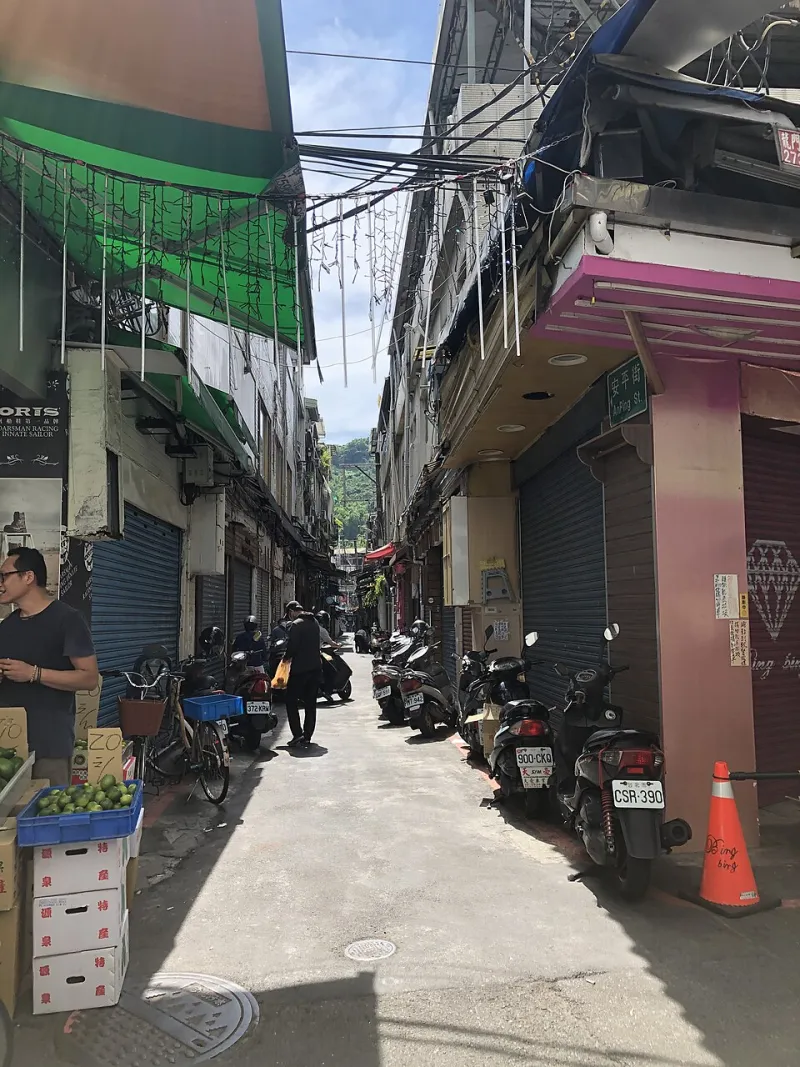
Photo: Taipei alley noodle shop plastic stools local street food, via s3.amazonaws.com
You have a list. Everyone has a list. It was assembled from a dozen tabs, two videos, and a screenshot someone texted you in July. And almost every pin on it sits on the same street — the front row of the night market, the block around the MRT exit, the ground floor of the mall.
That list isn't wrong. It's just aimed at the loudest block instead of the better one.
Here's the rule I'd hand any first-timer in Taipei in 2026: whatever street you're on, walk one more block. Toward the darker alleys. Toward the awnings, the scooters parked nose-in, the shop with a handwritten menu taped to the wall. That second block is where the rent is cheaper, the cooking is often more specific, and the prices assume you live here — which, for one lunch, is exactly what you want.
Why the Second Street Wins
Front-row rent in Taipei is brutal. A stall facing the night market's main artery or the plaza's ground floor pays for foot traffic, and that rent shows up on your bill. The shop one block back pays less for the same kitchen, which means it can afford better ingredients — or simply can afford to stay open for the regulars instead of the crowd.
There's a language clue too. English menus cluster where walk-by tourists cluster. A place on the second street can afford to be Chinese-only because it's already full at 12:10 on a Tuesday. That's not exclusion; that's a business that doesn't need to explain itself.
The third reason is pace. Front-row spots feed you and move you along. Second-street spots let you sit with a plastic stool and a bowl of noodles and watch the neighborhood eat. Which is the thing you actually came for.
Test Walk No. 1: Zhongshan, Behind the Department Stores
Start at Zhongshan MRT and walk up Nanjing West Road toward the department stores. The first block is a wall of photo menus, coffee chains, and boutiques selling things nobody needs on vacation. Fine. Keep going.
Cross one street and drift into the lanes off Zhongshan North Road Section 2 — the little grid near Lane 39, the alleys that run toward Linsen North Road. This is old Taipei stacked under new Taipei: noodle shops in the ground floor of buildings from the 1970s, a barber, a temple tucked between two storefronts.
What to order: a bowl of tshiat-á-mī (切仔麵), the yellow-noodle soup with a couple of slices of pork, plus a small plate of o-peh-tshiat (黑白切) — the assorted boiled cuts, usually pork liver, tripe, and a little squid, that you dip in soy paste. If it's raining and you're cold, switch to beef noodle soup. Total damage: somewhere around NT$150.
The cue: four people in line who all nod at each other. A menu written in marker. No photos anywhere.
Test Walk No. 2: Gongguan, Past the Night Market's Front Row
Gongguan is a university neighborhood, which means the night market's front row is geared toward people who are 20 and hungry at 10 p.m. It's fun. It's also the most photographed block in the district.
Do one lap, buy whatever you came for, then walk into the alleys behind — the lanes off Lane 90 and the smaller streets working their way toward Wenzhou Street. The crowd thins out, the prices drop, and the seating becomes laminate tables under fluorescent tubes.
What to order: a scallion pancake with egg (蔥油餅加蛋), a bowl of wonton soup, or a pork chop rice plate (排骨飯) if you want an actual meal instead of a crawl. If a shop is selling dry noodles with vinegar and a soft-boiled egg, order that and stop asking questions.
The cue: a laminated menu on the wall with the price column in the NT$60–90 range and no photographs. If the shop closes at 2 p.m. and reopens at 5, it's cooking for locals, not for you — and that's the point.
Test Walk No. 3: Xinyi, the Lunch Block Behind the Plaza
Xinyi is the hardest test, because the front row here is genuinely good — the malls around City Hall and Taipei 101 have excellent food. But lunch in Xinyi at 12:15 is a contact sport, and the second street is where the office crowd actually eats.
Walk away from the plaza, toward the blocks around Songgao Road and the lanes behind the arcades. You're looking for awnings, plastic stools, and a line of people in lanyards. This is the one neighborhood in Taipei where the lanyard is a good sign rather than a warning.
What to order: a zìzhùcān (自助餐) plate — the buffet where you point at three trays and someone ladles them over rice. Or ròugēng miàn (肉羹麵), thick noodles in a pork-thickened soup with vinegar on the table. Sit wherever there's space.
The cue: it's 12:10, the line is eight deep, and nobody is looking at a phone menu.
How to Read a Candidate Before You Sit Down
You don't need Chinese to screen a place. Run these checks in about 15 seconds:
- No photos on the menu. Photos are a marketing cost. A shop full of regulars doesn't pay it.
- Prices under NT$150, in round-ish numbers. NT$70, NT$90, NT$110 — that's local pricing.
- One thing done well. Three dishes on the wall and a single pot steaming is better than a 40-item menu.
- Stools and a folding table. Comfort is not the product. Food is.
- A TV showing the news, volume up. Nobody is curating your experience.
- Scooters parked at an angle only regulars would use. This sounds like a joke. It isn't.
If two of those are true, sit down. If you're still unsure, do a second lap of the block and see what fills up at noon. Worse case: you spend NT$120 on a lunch that wasn't the best of your trip. That's the entire downside.
Three Dishes That Always Work
When the menu is Chinese-only and the person behind the counter is already looking at the next customer, order one of these. Everyone in Taipei knows them, and every kitchen does at least one well.
滷肉飯 (braised pork rice). Minced pork stewed in soy and five-spice over white rice, usually with a pickled vegetable. Cheap, filling, and a fair way to judge a kitchen.
乾拌麵 (dry-tossed noodles). Noodles, oil, vinegar, maybe a little scallion. Ask for gān (dry) if a place is offering soup or dry versions of the same bowl.
燙青菜 (blanched greens). Whatever's in season, boiled briefly and dressed with garlic and soy. It's the dish that tells you whether anyone in the kitchen cares.
The Rule, Packed Small
The list you brought is a fine starting point, and the front row is worth one lap. But the meal you'll text someone about is almost always one block back, past the neon, where the menu has no pictures and the woman at the counter has been making the same bowl since before you knew Taipei existed.
Give it 90 seconds of your afternoon. That's the whole commitment. Taipei will handle the rest.