The Box That Survives the Flight: Grading Taipei's Pineapple Cakes With a Carry-On in Mind
Every traveler leaving Taipei buys pineapple cake. Most of them buy it in the last two hours of the trip, at the airport, from a shelf, with no idea what they're handing to their coworkers. This is the guide for doing it better: a short crawl, a scoring rubric, and an honest answer to the only question that matters when you're standing in a security line — will this box look decent when it lands.
What You're Actually Buying
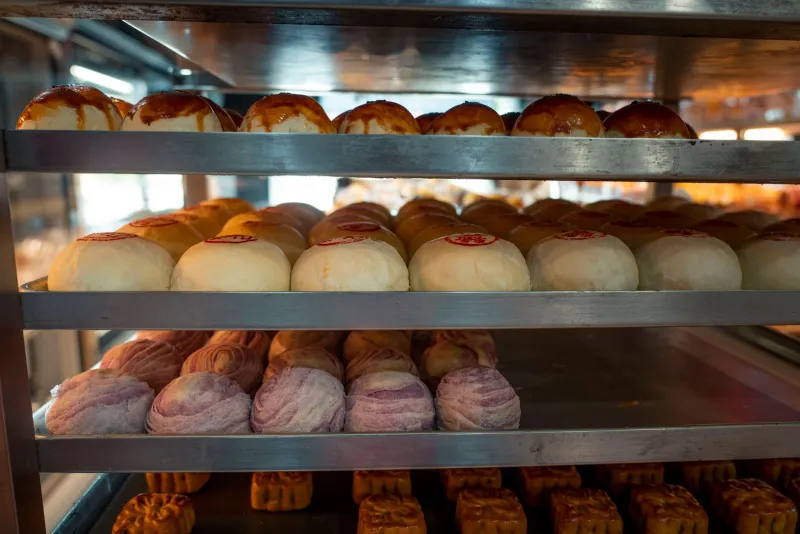
A pineapple cake is a small, dense brick: a short, buttery crust wrapped around a jammy filling. That's it. The variation lives in the details, and the details are the whole argument.
Old-school filling blends pineapple with wintermelon. It's softer, sweeter, paler, and cheaper — the version that built the souvenir industry.
Pure pineapple filling is more fibrous, more tart, and occasionally sharp enough to make your jaw tingle. Modern shops lean this way and charge for it.
Crust runs from crumbly shortbread to something closer to a soft cookie. Neither is wrong. Both will shed on your shirt.
Also worth knowing: a sealed, individually wrapped box is your friend. Loose pastries in a paper sleeve are a different, sadder category of souvenir.
The Crawl: Three Stops, One Afternoon
Stop 1 — Songshan, for the famous one
Chia Te is the bakery every guidebook names and every tour bus stops at, and the line reflects it. The pineapple cakes are square, the crust is rich, and the mixed boxes travel well because everything is sealed. While you're there, pick up a couple of the cranberry pastries and a sun cake; the pineapple cake is the headline, but it isn't the best thing in the shop.
Fifteen minutes away on foot is SunnyHills, which runs the opposite playbook: pure pineapple, no wintermelon, a slightly taller cake, and a shop that hands you a free cake and a cup of tea before you've decided anything. It's the cleanest expression of the modern style and the easiest place to understand what the fuss is about.
Stop 2 — Dihua Street, for the old version
Dadaocheng's dry-goods street is where you taste the wintermelon style in its natural habitat — small shops, older packaging, prices that make the boutiques look silly. Buy two, eat one on the sidewalk, and decide whether you actually prefer the tart stuff or just thought you did.
Stop 3 — Anywhere with a counter and a queue
Heritage chains and department-store bakeries reliably land in the middle: decent crust, moderate sweetness, boxes designed for gifting. Kuo Yuan Ye is the classic name here, with a Shilin presence and a century and a half of practice. Good default if you're buying eight boxes for eight people and don't want to think.
The Scorecard
Score each contender 1–5 and total it. Prices are ballpark; expect NT$35–60 per piece, roughly a dollar and change to two bucks.
| Criterion | What you're judging |
|---|---|
| Crust | Buttery? Crumbly? Does it hold together in one bite? |
| Filling | Tart or sweet? Fibrous or smooth? Any real fruit flavor? |
| Sweetness | Would an American palate call this restrained or cloying? |
| Crush resistance | Does the box survive a backpack? |
| Shelf life | Two weeks or two months? |
| Price per piece | Math, not vibes |
| Line | Is the wait worth the pastry? |
My own sheet, if you want a starting point: SunnyHills wins on filling and loses on price. Chia Te wins on gifting logistics and crust. Dihua Street wins on both price and historical interest, and loses on shelf life. Chain bakeries win nothing and disappoint nobody, which is its own kind of victory.
The Crush Test, the Melt Test, and Customs
Buy mid-trip, not on day one. Preservative-free versions can go stale in ten to fourteen days. Mainstream boxes run thirty to sixty. Read the sticker on the back; it's in Chinese and English, and it's the most useful thing on the packaging.
Carry-on beats checked. Butter crust softens in heat, and a summer tarmac is not kind to a box in the belly of a plane. A cabin bag also means the box arrives uncrushed and still square at the corners.
Skip the glass and the liquids. Nobody needs pineapple cake jam in a jar. The cakes themselves are baked goods, not liquids, so security has no opinion.
US customs: commercially packaged baked goods with no meat are generally fine to bring back. If a form asks, tell the truth. Don't try to sneak in fresh fruit — that's the thing that gets confiscated.
One Honest Warning
Clear plastic sleeves at night markets and gift stalls look like a bargain. Often they're wintermelon-heavy, dry, and packaged for a shelf rather than a suitcase. If the box has no shop name, no ingredient list, and no date, walk on.
The Short Answer
Buy one box of the tart, pure-pineapple style for the person who will actually taste it. Buy two boxes of the classic version for the office, because the office does not deserve the good stuff. Buy a third for yourself, put it in your carry-on, and eat it on the plane while everyone else is fighting over the pretzels.